
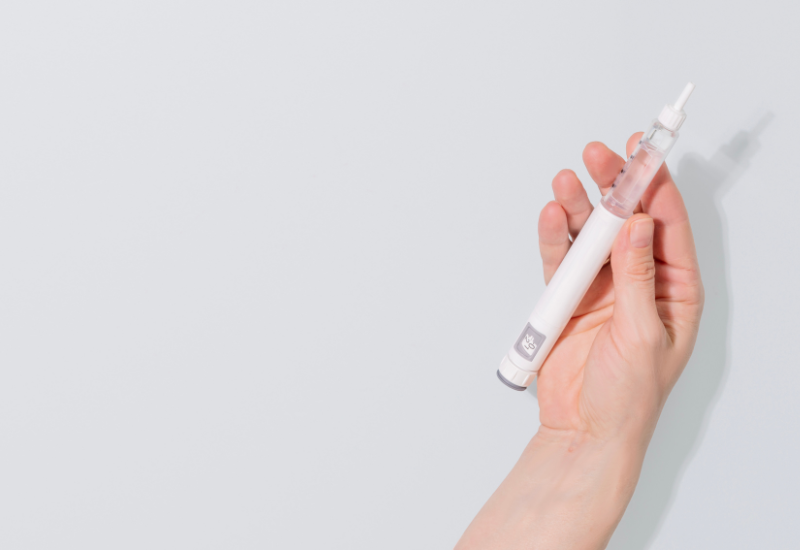
GLP-1 medications have become a leading option for weight management and metabolic health, and access has shifted just as dramatically as adoption.
Telehealth now makes it possible to complete a full clinical evaluation, receive a prescription, and have medication delivered without a single in-person visit. But virtual doesn’t mean informal. Here’s exactly what the process involves.
What “GLP-1 Online” Actually Means
Getting a GLP-1 medication online means completing the same medical process as an in-person visit, including screening, consultation, prescription, and follow-up, through a licensed provider via telehealth. Medication is then shipped directly to you or routed to a local pharmacy.
What it does not mean is skipping clinical evaluation, receiving instant approvals, or receiving care without follow-up.
Step 1: Health Screening and Intake
The process begins with a structured intake form covering your current weight, health history, active medications, metabolic conditions (such as type 2 diabetes, PCOS, or thyroid disease), and any prior weight loss treatments.
This isn’t administrative paperwork; it’s clinical triage. GLP-1 medications carry real contraindications, including a boxed warning for patients with a personal or family history of medullary thyroid carcinoma or Multiple Endocrine Neoplasia syndrome type 2 (MEN 2).
Pancreatitis history is also a disqualifying factor. A thorough intake is what makes safe prescribing possible.
Step 2: Virtual Consultation with a Licensed Provider
You’ll meet with a licensed provider, typically a nurse practitioner or physician with training in metabolic medicine, via telehealth. This consultation reviews your intake in depth, evaluates eating patterns and lifestyle factors, screens for conditions that affect treatment safety, and sets realistic expectations for outcomes.
A quality consultation takes time. If yours feels like a rubber stamp, that’s a red flag. Reputable programs don’t issue GLP-1 prescriptions without documented clinical justification.
Step 3: Eligibility Assessment and Medication Selection
Not everyone qualifies, and the criteria matter.
FDA-approved indications for semaglutide (Wegovy) require a BMI of 30 or higher, or 27 or higher with at least one weight-related comorbidity such as hypertension, dyslipidemia, or obstructive sleep apnea. If you’re eligible, your provider will select the appropriate agent and establish a starting dose.
Currently available GLP-1 options include semaglutide (Ozempic, Wegovy) and tirzepatide (Mounjaro, Zepbound), which differ in mechanism, dosing schedules, and side effect profiles. The right choice depends on your specific health profile, not availability or cost alone.
Step 4: Prescription and Fulfillment
Once your treatment plan is finalized, your prescription is sent to a pharmacy, either a partner mail-order pharmacy for home delivery or a local pharmacy of your choosing.
You’ll receive the medication along with dosing instructions, storage requirements (most injectables require refrigeration at 36 to 46 degrees Fahrenheit), and injection technique guidance. With ongoing supply constraints, some telehealth programs prescribe compounded versions from 503B outsourcing facilities. While legal under certain conditions, compounded medications are not FDA-approved and vary in quality controls.
Ask your provider directly whether you’re receiving an FDA-approved product.
Step 5: Starting Treatment
GLP-1 medications work through gradual dose escalation, typically starting at a fraction of the therapeutic dose and increasing every four weeks.
Early effects include reduced appetite, faster satiety, and decreased food cravings. Common early side effects are nausea, constipation, and fatigue, which usually resolve within the first few weeks as your body adjusts. Do not self-escalate. Increasing your dose faster than prescribed is the most common reason patients discontinue due to intolerable side effects.
Step 6: Ongoing Monitoring
This step separates quality programs from low-effort ones.
GLP-1 treatment requires regular provider check-ins to assess response, adjust dosing, manage side effects, and monitor for less common but serious complications, including gallbladder disease, which occurs at elevated rates in patients experiencing rapid weight loss.
Lab monitoring such as a metabolic panel or HbA1c for diabetic patients may be recommended at baseline and during treatment. If your program has no structured follow-up, you’re not receiving adequate care.
Step 7: Evaluating Progress
Clinical trials for semaglutide showed average weight loss of approximately 15% of body weight over 68 weeks at the therapeutic dose.
Progress is rarely linear, and individual response varies significantly based on adherence, diet, activity, and metabolic factors. Equally important markers include changes in hunger signaling, reduced food noise, improved fasting glucose, and blood pressure. The number on the scale is one data point, not the only one.
Frequently Asked Questions
Is it safe to get GLP-1 medications online?
Yes, when the program includes documented medical screening, a real clinical consultation, and structured follow-up. The safety risks come from programs that skip these steps, not from the telehealth format itself.
What if I have side effects?
Contact your provider. Most early side effects are manageable through dose adjustment or titration slowdown. More serious symptoms, including severe abdominal pain, vision changes, or rapid heart rate, warrant prompt evaluation and should not be managed by waiting.
Is telehealth as effective as in-person care for this?
For GLP-1 management specifically, evidence supports virtual care as comparable to in-person outcomes, with higher adherence rates attributed to reduced friction in follow-up scheduling.
Ready to Find Out If You’re a Candidate?
Book a consultation with one of our nurse practitioners, licensed providers with specific training in metabolic health and GLP-1 management.
During your 30-minute visit, you’ll receive a clinical eligibility assessment, a review of which medications fit your health profile, and a clear picture of what treatment would actually involve for you.
No vague timelines, no pressure, just a straightforward conversation that answers whether this is the right option before you commit to anything.
Get Started Today

Contact
New Mexico
Phone: (505) 910-4070
Fax: (505)-910-4587
Washington:
Phone: 509-209-9175
Fax: 509-209-9286
Address
New Mexico: 10409 Montgomery PKWY NE #202b Albuquerque, NM 87111
Washington: 425 W. 2nd AvenueSuite #106, Spokane, WA 99201
Arizona: 9700 N. 91st St. #A-115, Scottsdale, AZ 85258